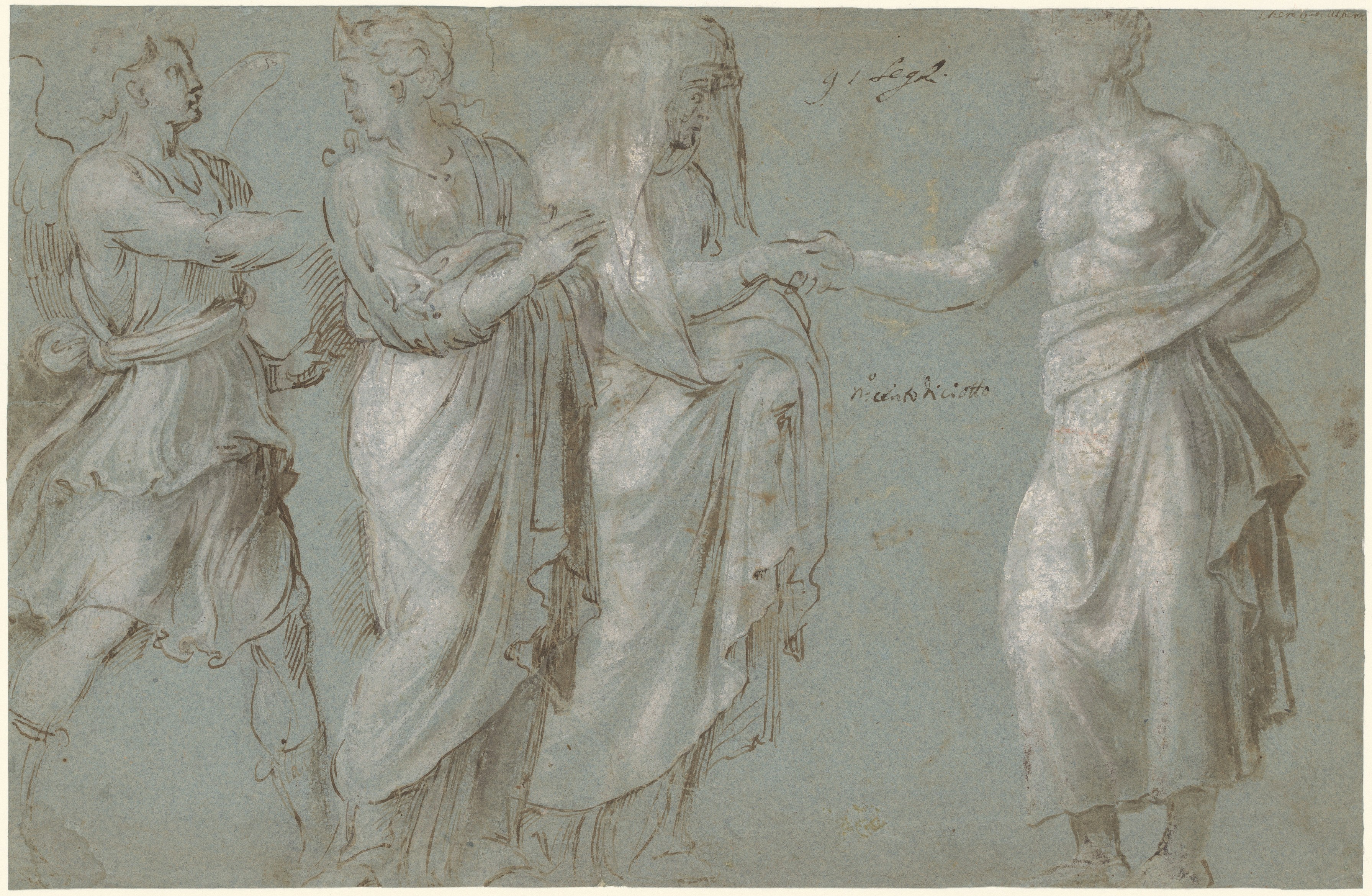
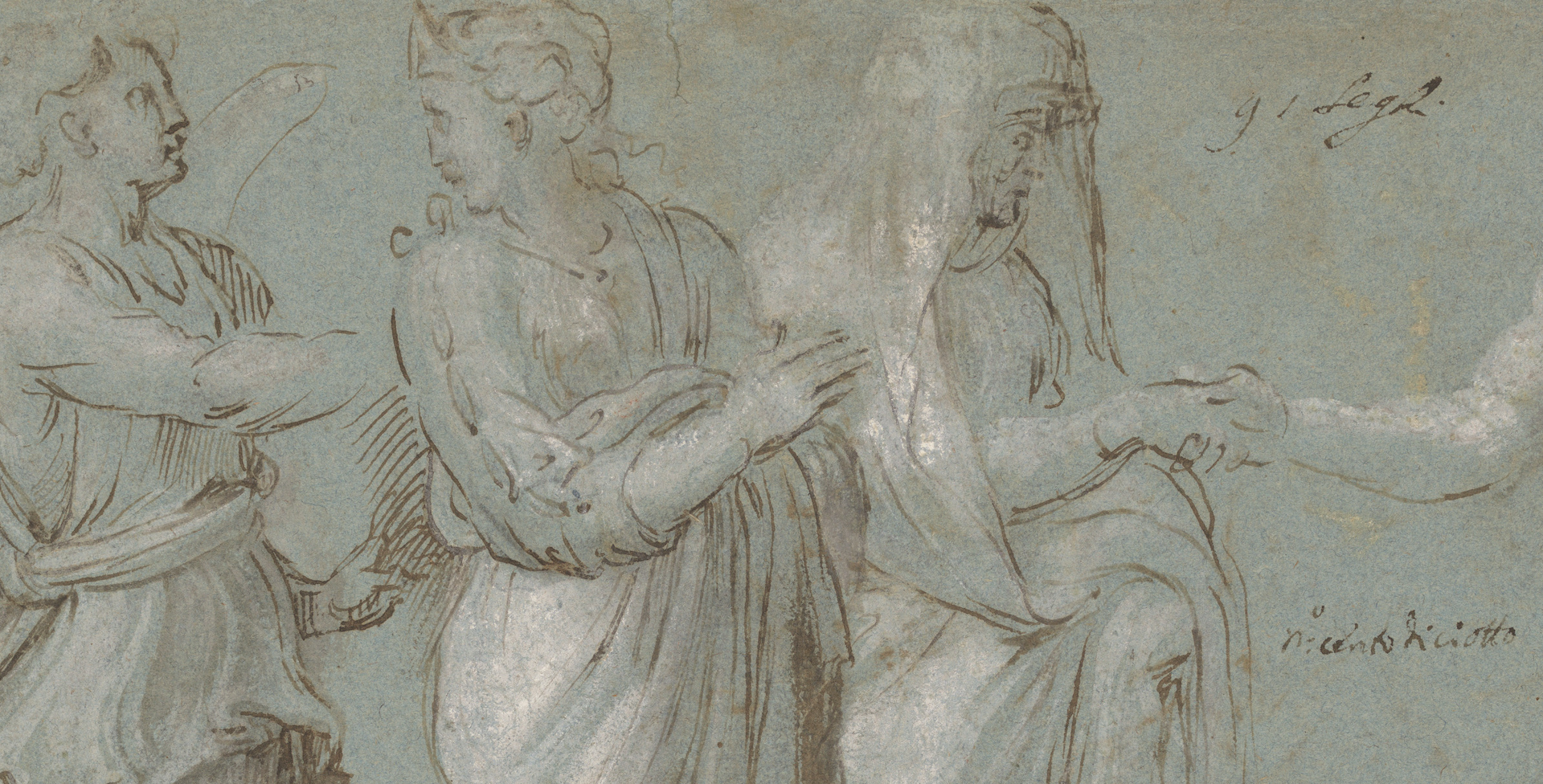
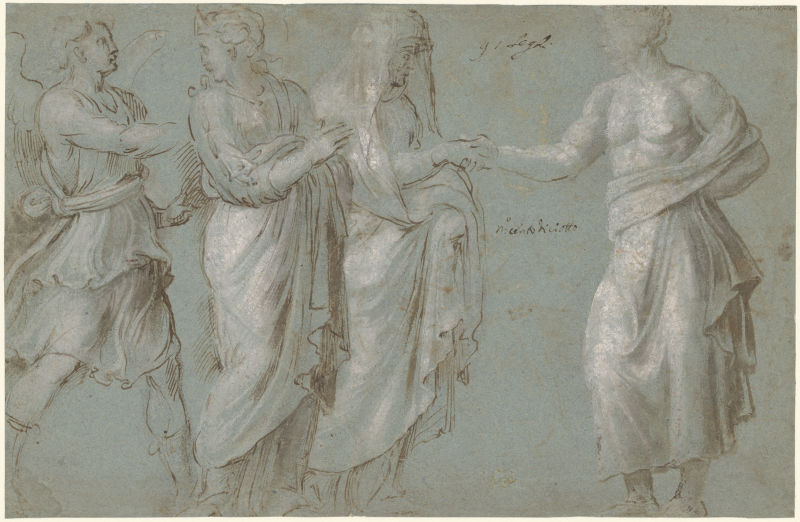
 Biagio Pupini, Former Attribution Polidoro da Caravaggio, A Winged Figure, two Women, and a Man, early–mid-16th century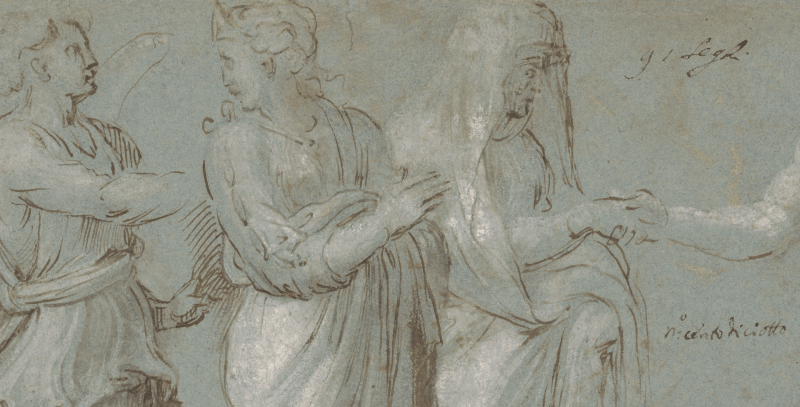
Original, The Metropolitan Museum of Art, New York. Visited in 2017-2025.
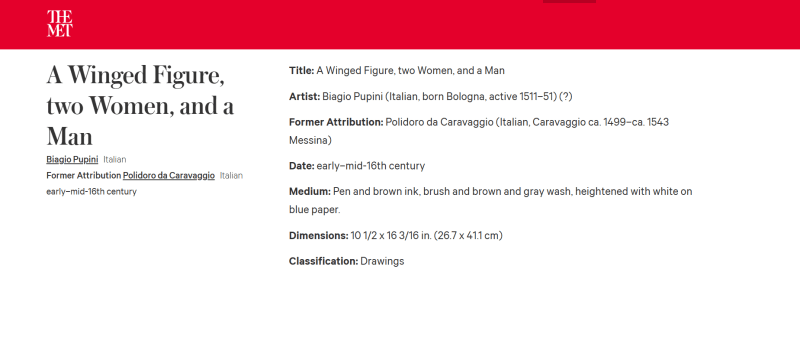
Biagio Pupini, Former Attribution Polidoro da Caravaggio, A Winged Figure, two Women, and a Man, early–mid-16th century
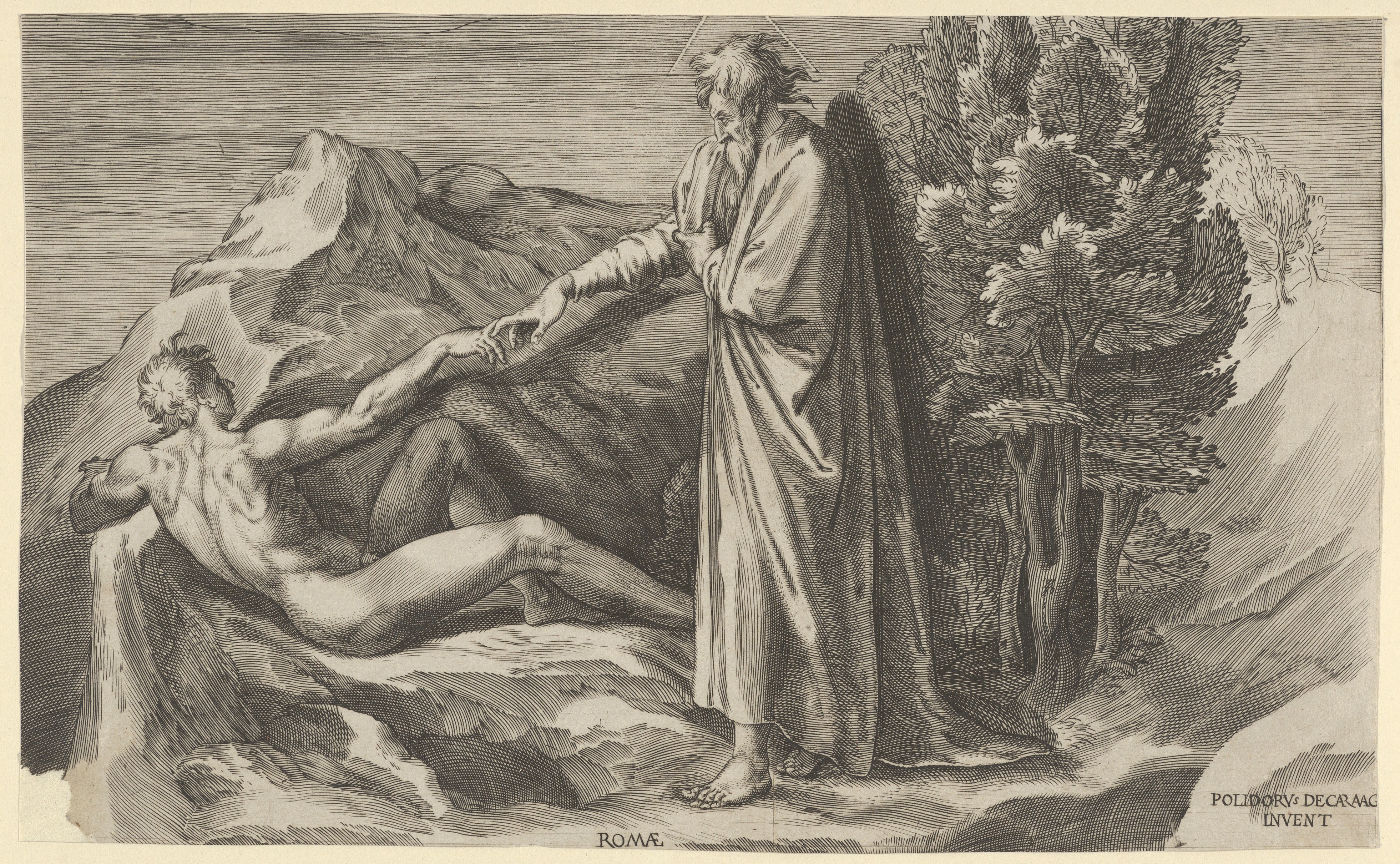
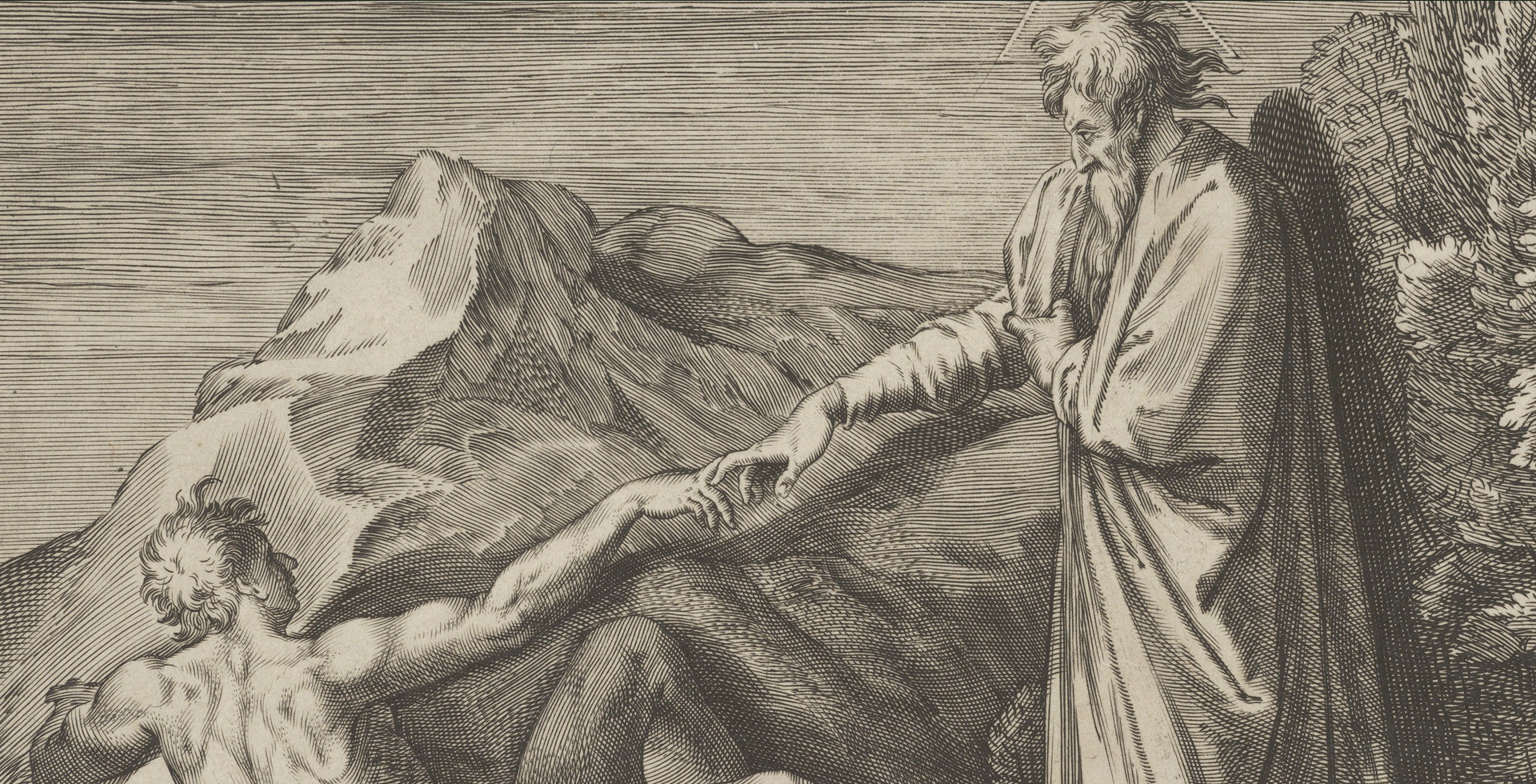
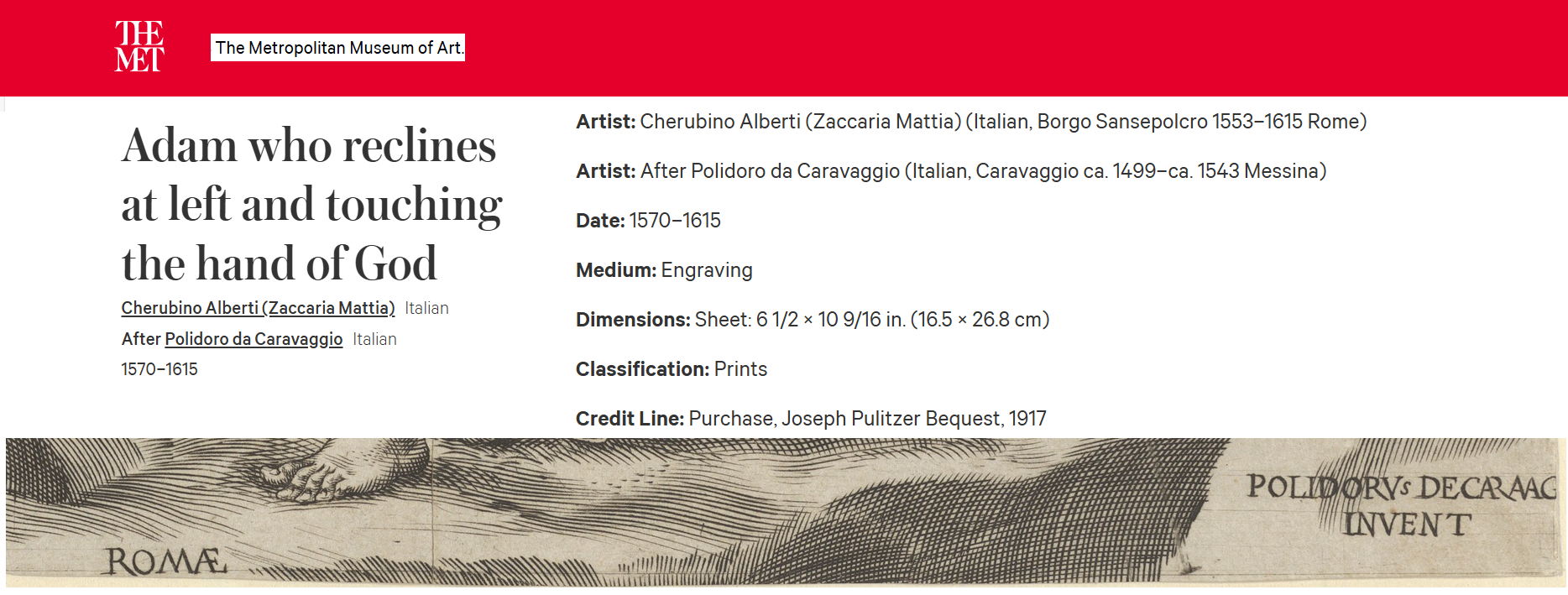
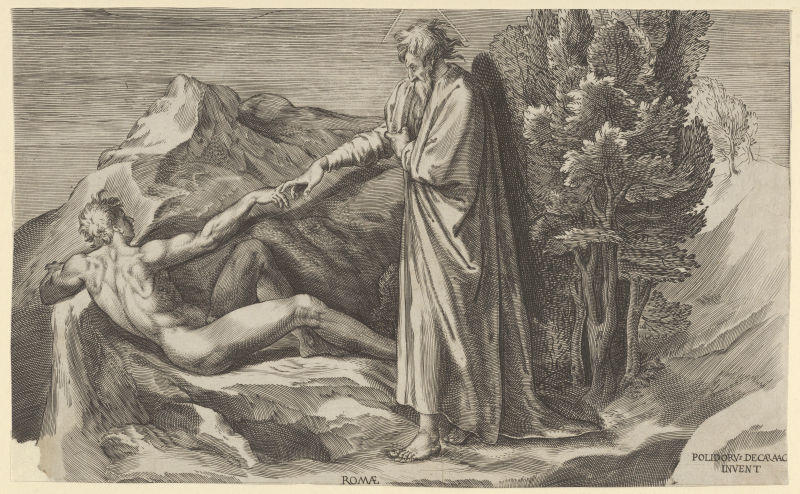 After Polidoro da Caravaggio, Cherubino Alberti, The Creation of Adam who reclines at left and touching the hand of God, 1570–1615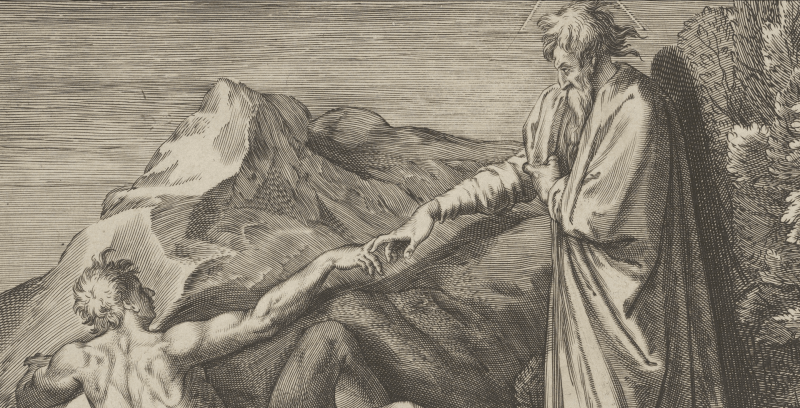
Original, The Metropolitan Museum of Art, New York. Visited in 2017-2025.
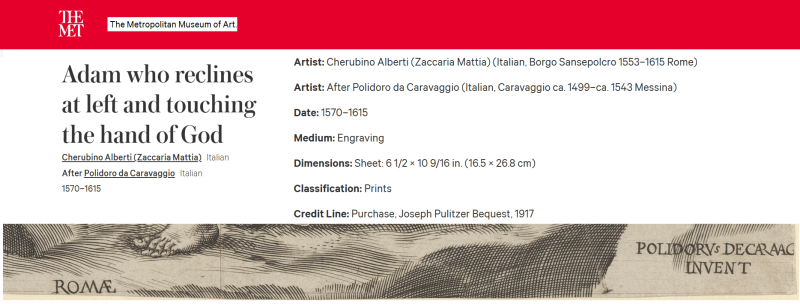 After Polidoro da Caravaggio, Cherubino Alberti, The Creation of Adam who reclines at left and touching the hand of God, 1570–1615
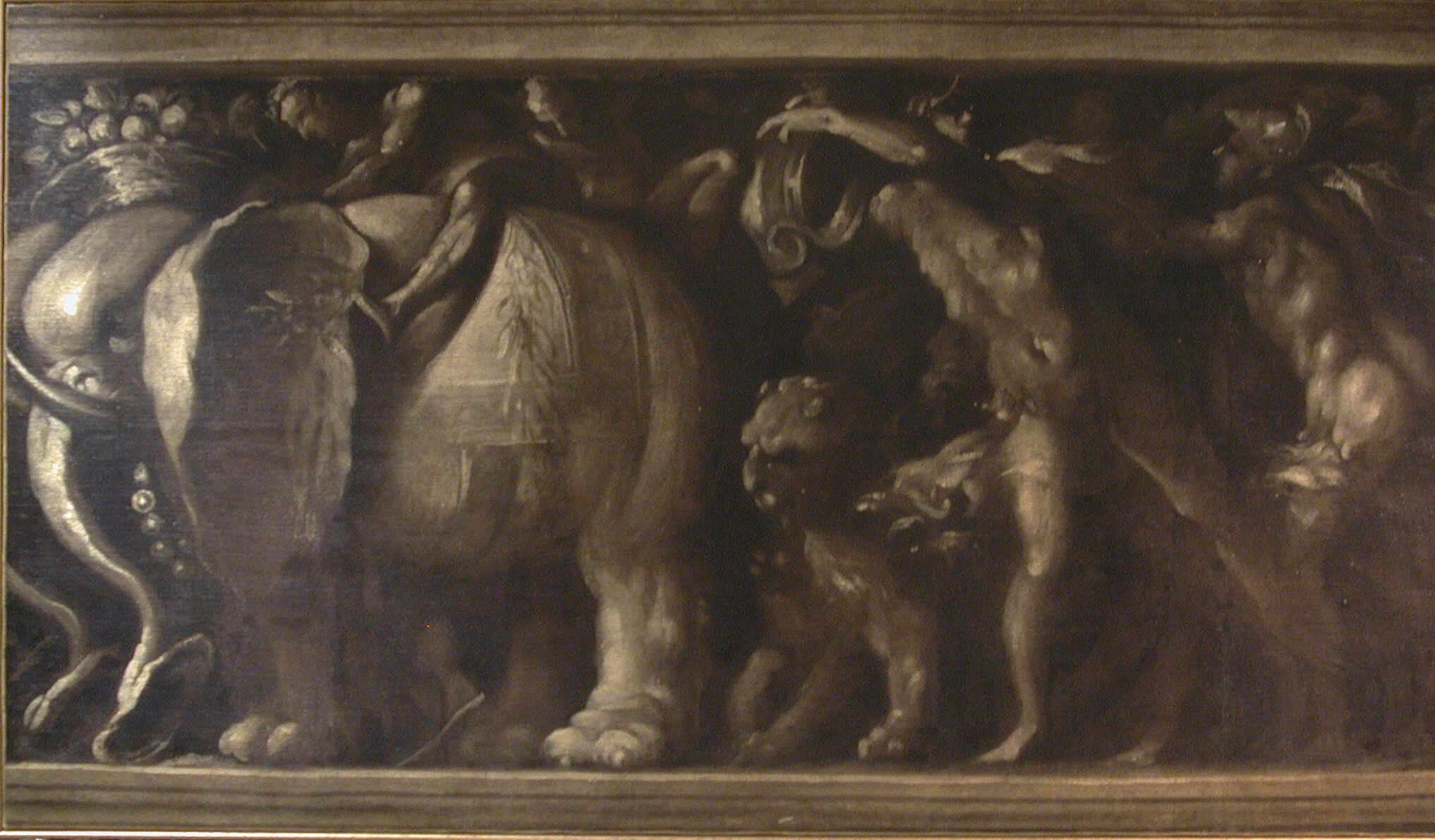
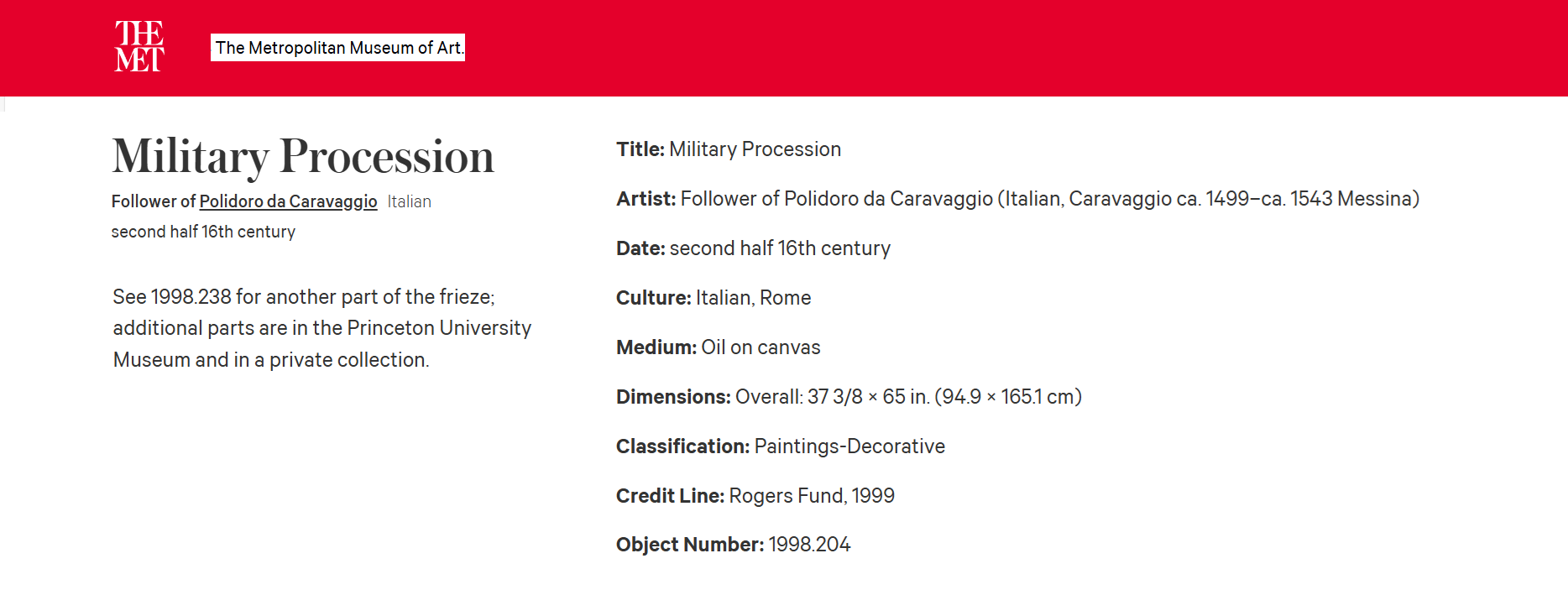
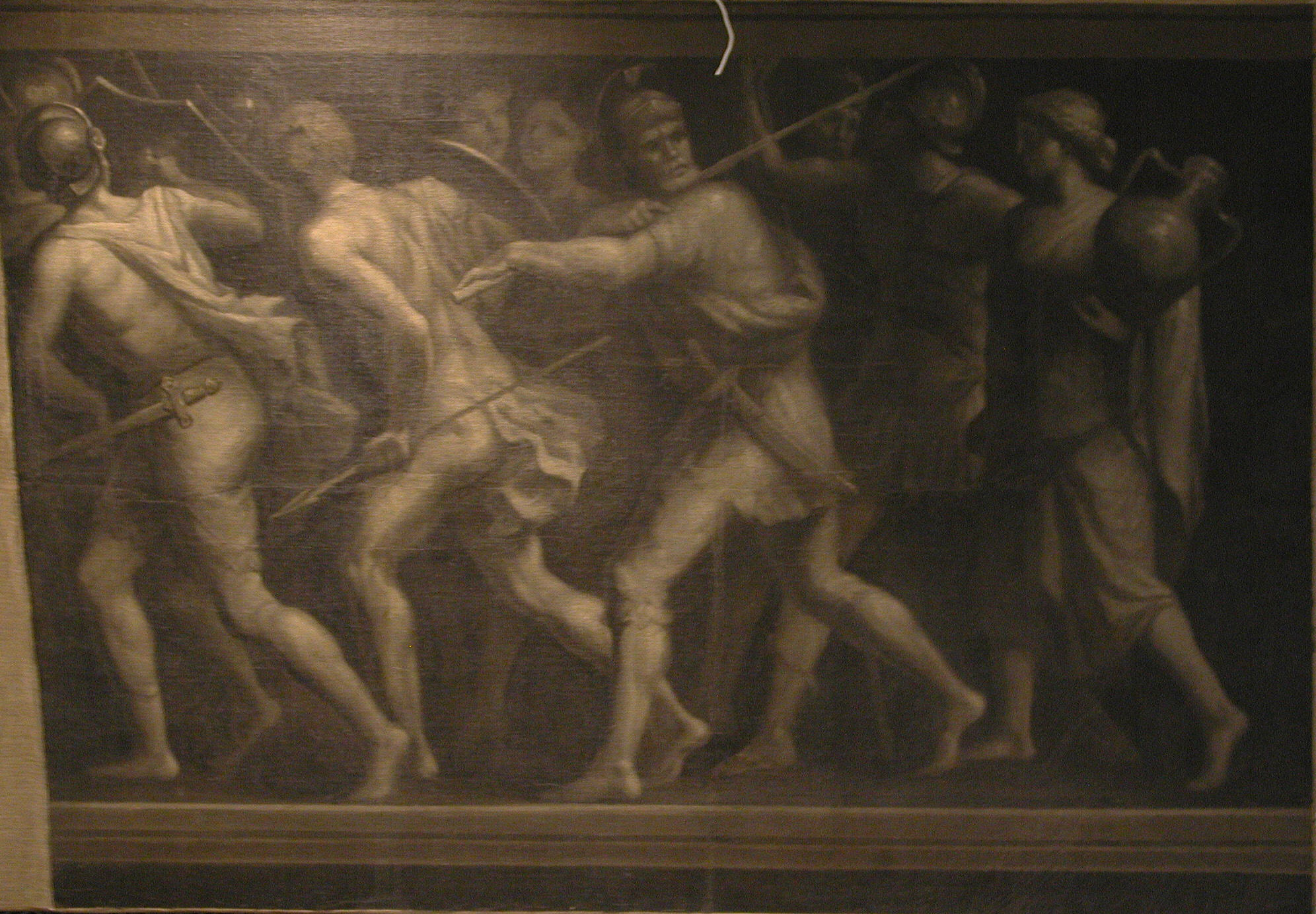
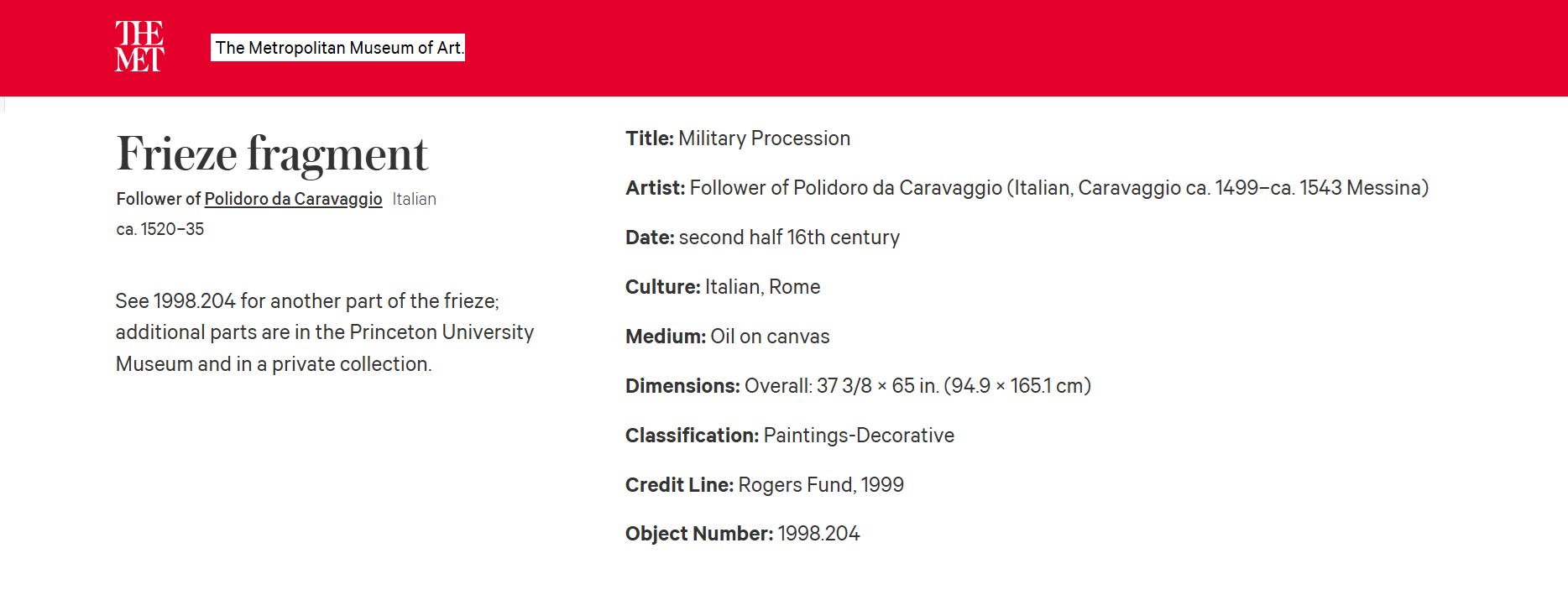
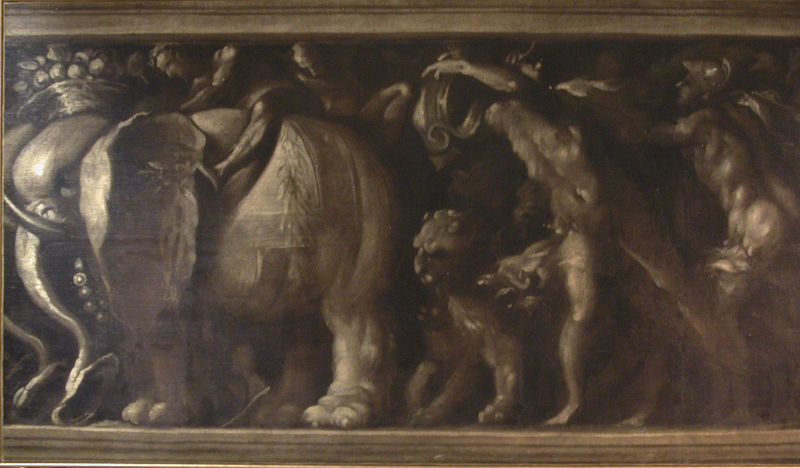 Follower of Polidoro da Caravaggio, Military Procession, second half 16th century
Original, The Metropolitan Museum of Art, New York. Visited in 2017-2025.
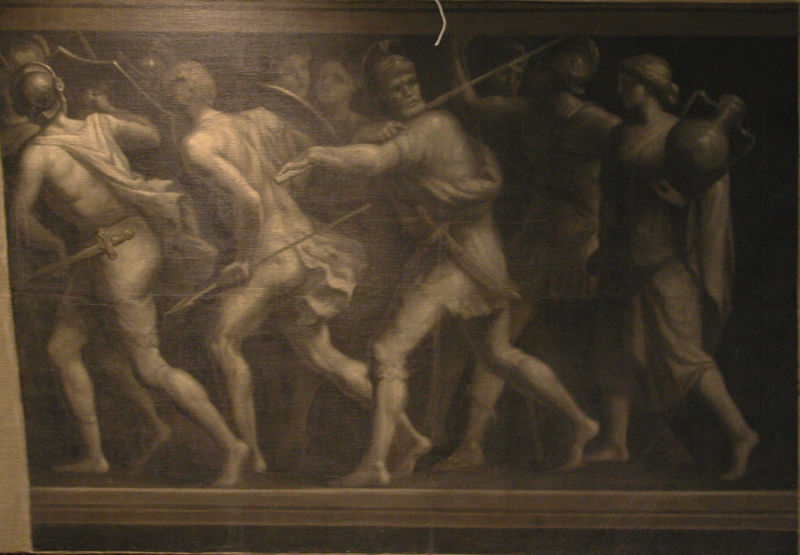 Follower of Polidoro da Caravaggio, Frieze fragment, ca. 1520–35
Original, The Metropolitan Museum of Art, New York. Visited in 2017-2025.